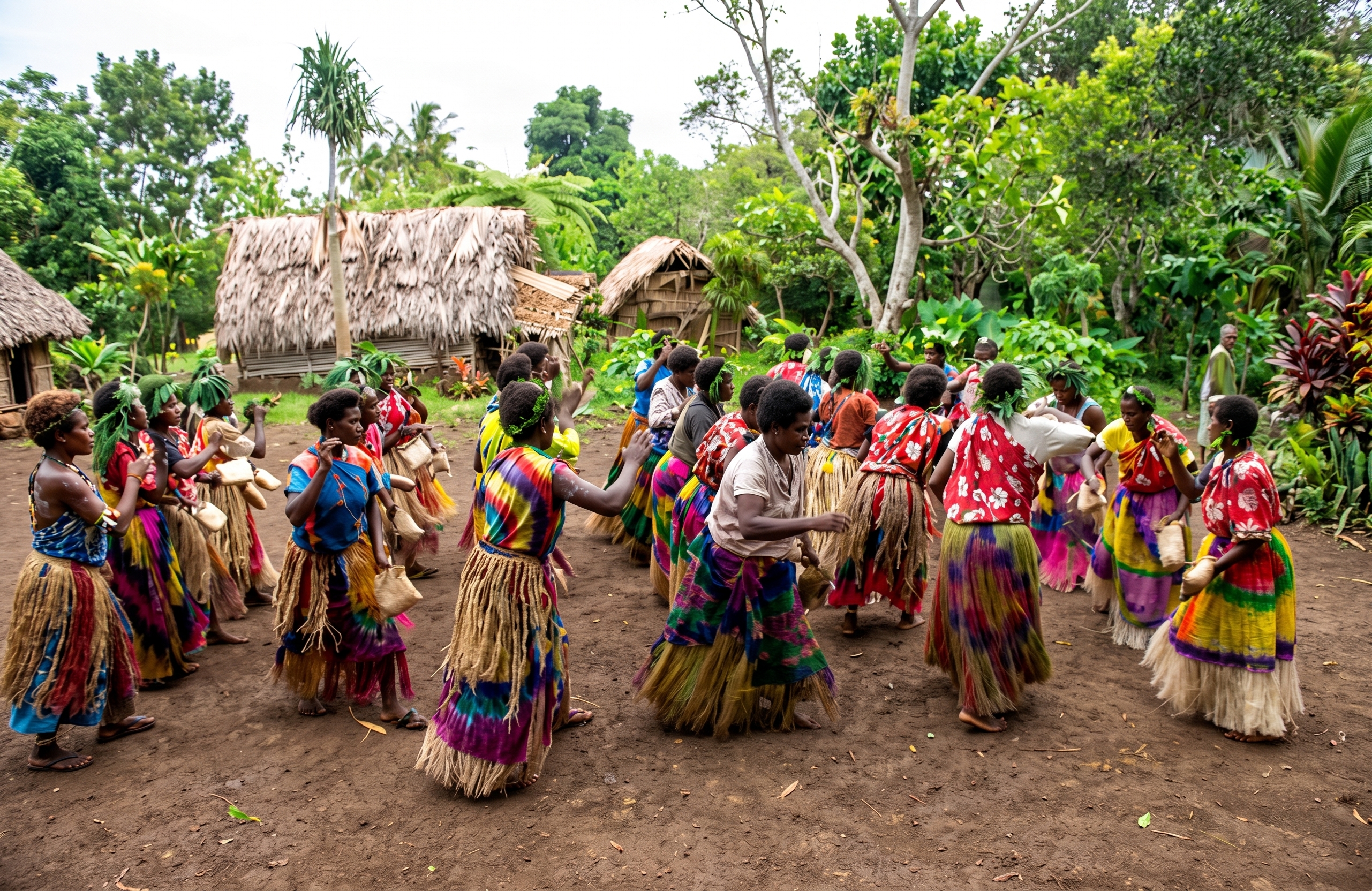
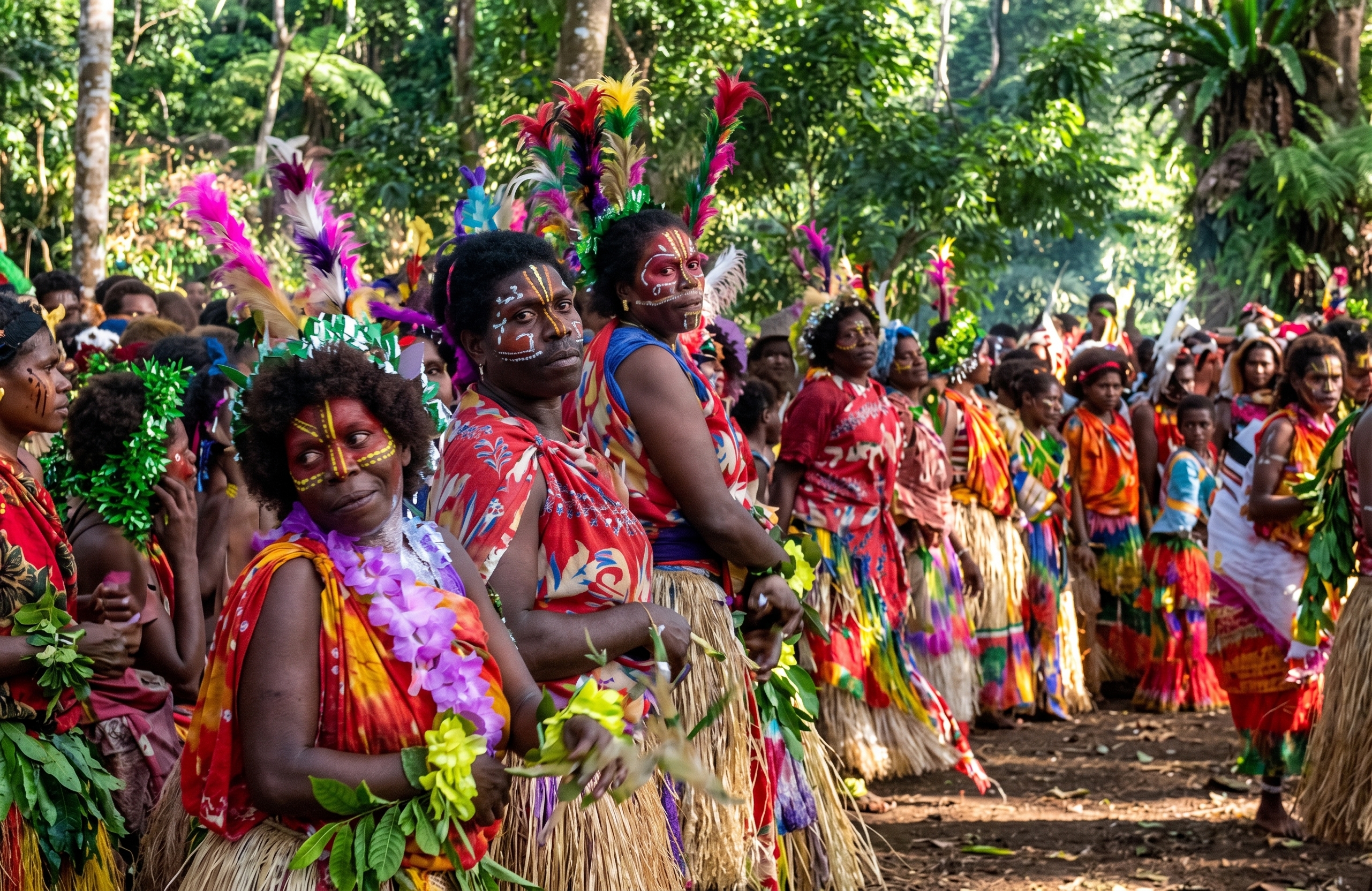
Nekowiar is the name for the whole exchange cycle; the Toka, strictly, is just the men's dance at its center — but on Tanna, and in most accounts from outside it, the two names get used for the same event, and so do I. I went to Tanna in September 2007, invited in by the chiefs of Yesup, to film one of these cycles as it happened. An exhibition on the ceremony by the Alliance Française (Suva) calls the Toka “the culmination of the Nekowiar exchange cycle which rules the island's social life,” gathering dancers from a dozen nakamals — named community meeting-grounds — into one closing night. That's the anthropology. What follows is closer to what it actually felt like to be standing in the middle of it.
The scholar most associated with Tanna is the French geographer Joël Bonnemaison, who spent decades doing fieldwork there and wrote it up in The Tree and the Canoe: History and Ethnogeography of Tanna (University of Hawai'i Press, 1994). His central argument is that Tanna people met missionary and colonial pressure not by giving up their world but by actively reworking it — reviving, and sometimes reinventing, kastom, anchored in their own origin myths, as a deliberate answer to Western institutions. He treats Tanna's persistence, and events like the Nekowiar specifically, as “a living symbol of resistance for people throughout Oceania.” Lamont Lindstrom, an American anthropologist who has written on Tanna across forty years, covers similar ground in Tanna Times: Islanders in the World, University of Hawai'i Press, 2022.
Seen that way, the Nekowiar belongs to a family of ceremonial exchange systems anthropologists have studied across Melanesia since Marcel Mauss's The Gift (1925) — the same broad category as the Kula ring of the Trobriand Islands (Malinowski) or the Moka of the Papua New Guinea Highlands. In all three, wealth (pigs, kava, shell valuables, mats) doesn't just change hands — the act of giving and the delayed obligation to give back, publicly and often at greater value, is what actually builds alliance, settles disputes and confers status, standing in for a centralized political authority the island never had.
It isn't run on a fixed calendar. A host village decides when it's ready and invites others; the gap between one Nekowiar and the next has sometimes stretched to years — the 2020 gathering was reportedly the island's first in eight years — and the date can still slip once preparation is underway (mine was pushed back a month, for rain, kava supply and the right phase of the moon). Preparation itself runs for months to years beforehand: gardens grown out specifically for the pigs and kava it takes to give away, dances rehearsed night after night. It was originally a way of ending cycles of tribal warfare between clans, and that peace-making function — along with arranging marriages between villages and formally installing paramount chiefs (yeremwanu) — is still central to what it does.
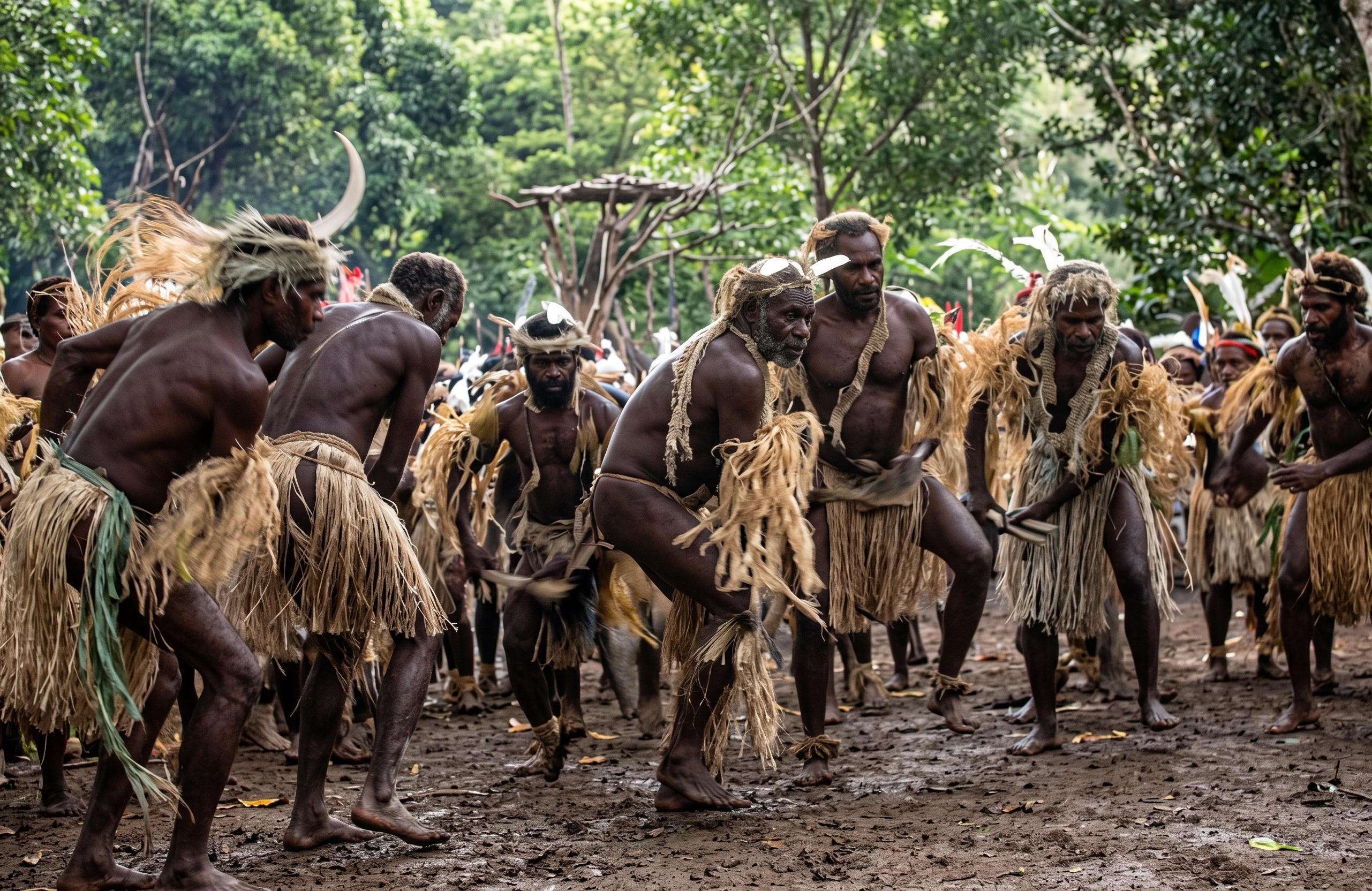
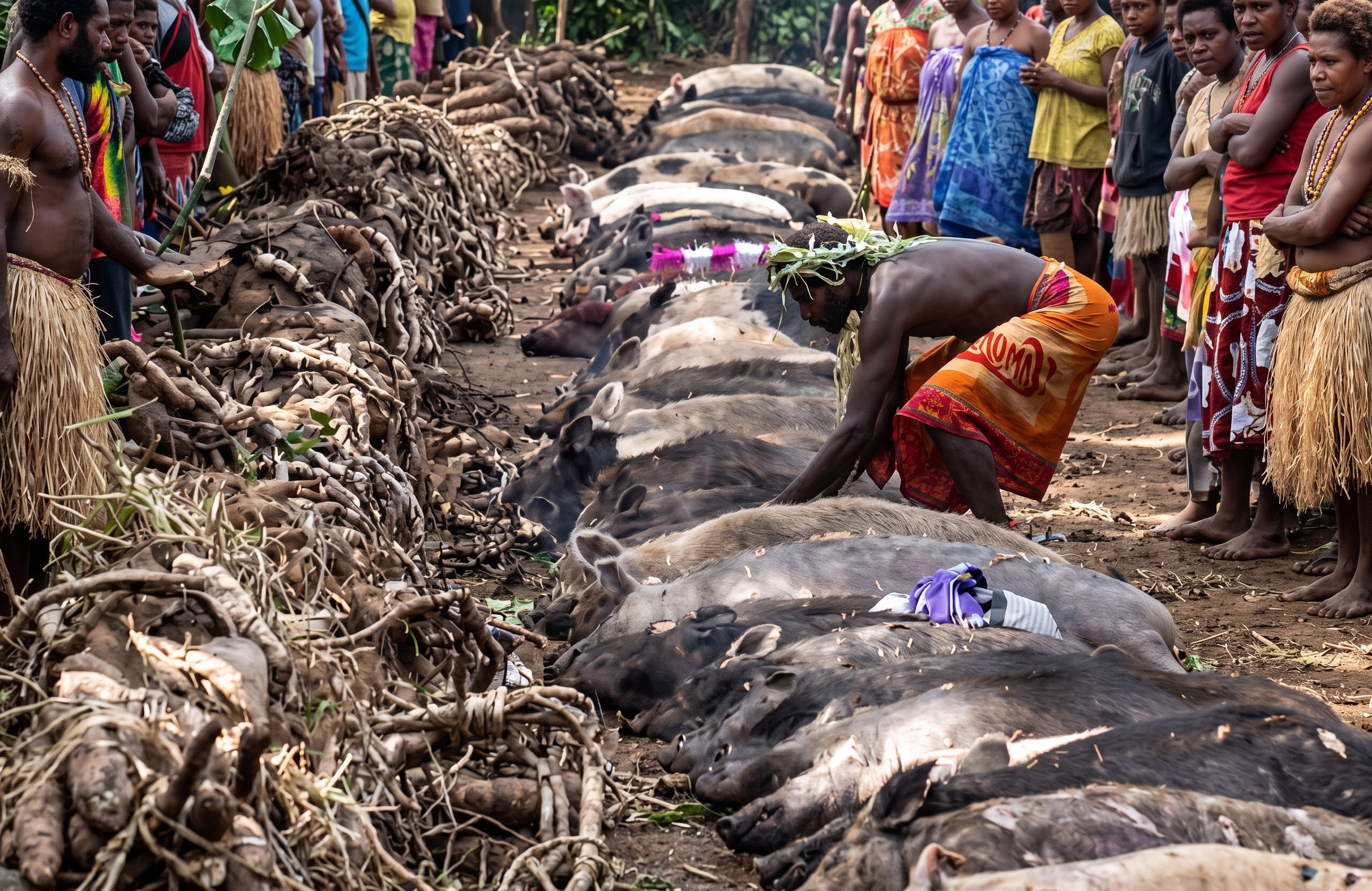
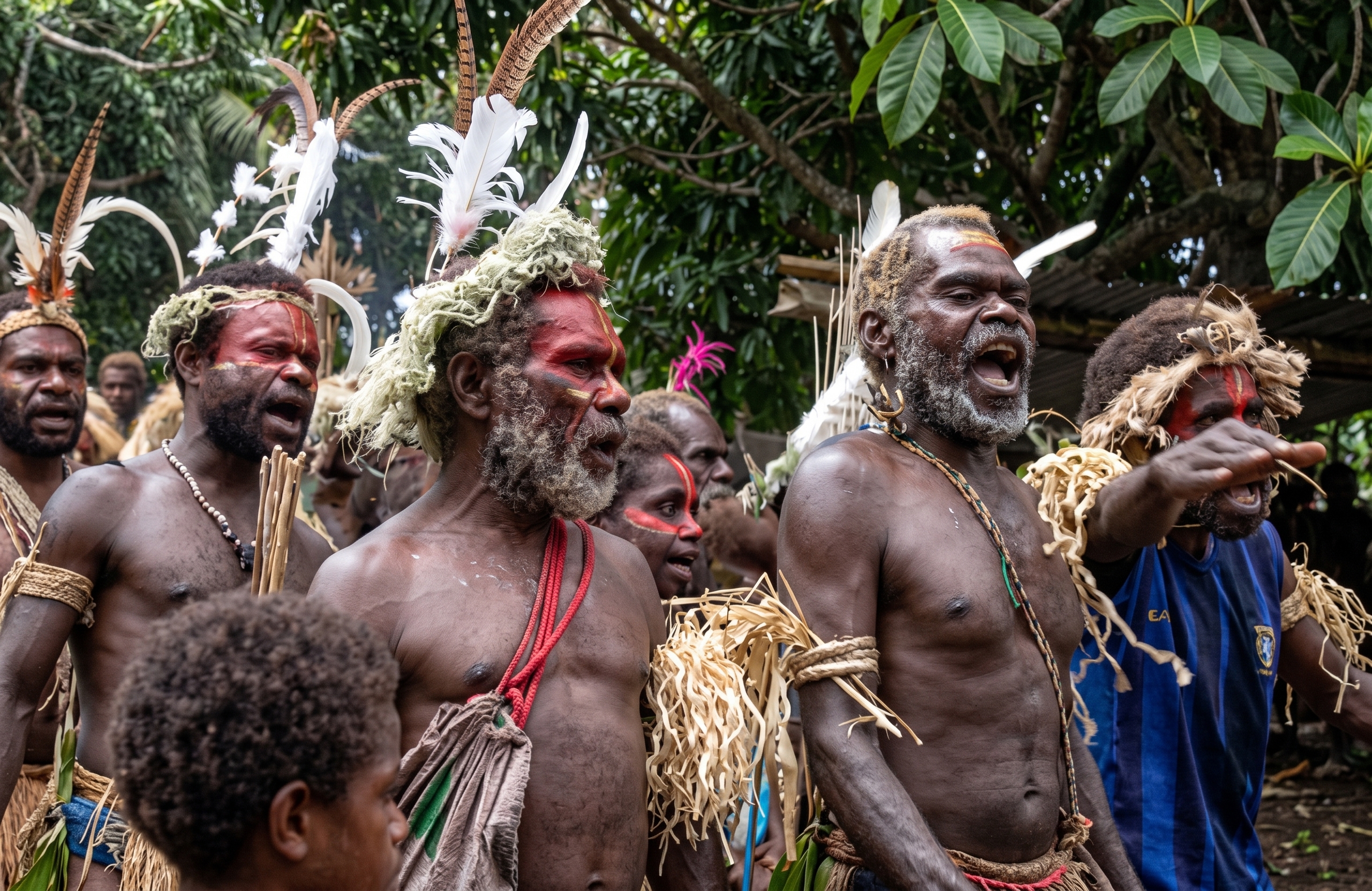
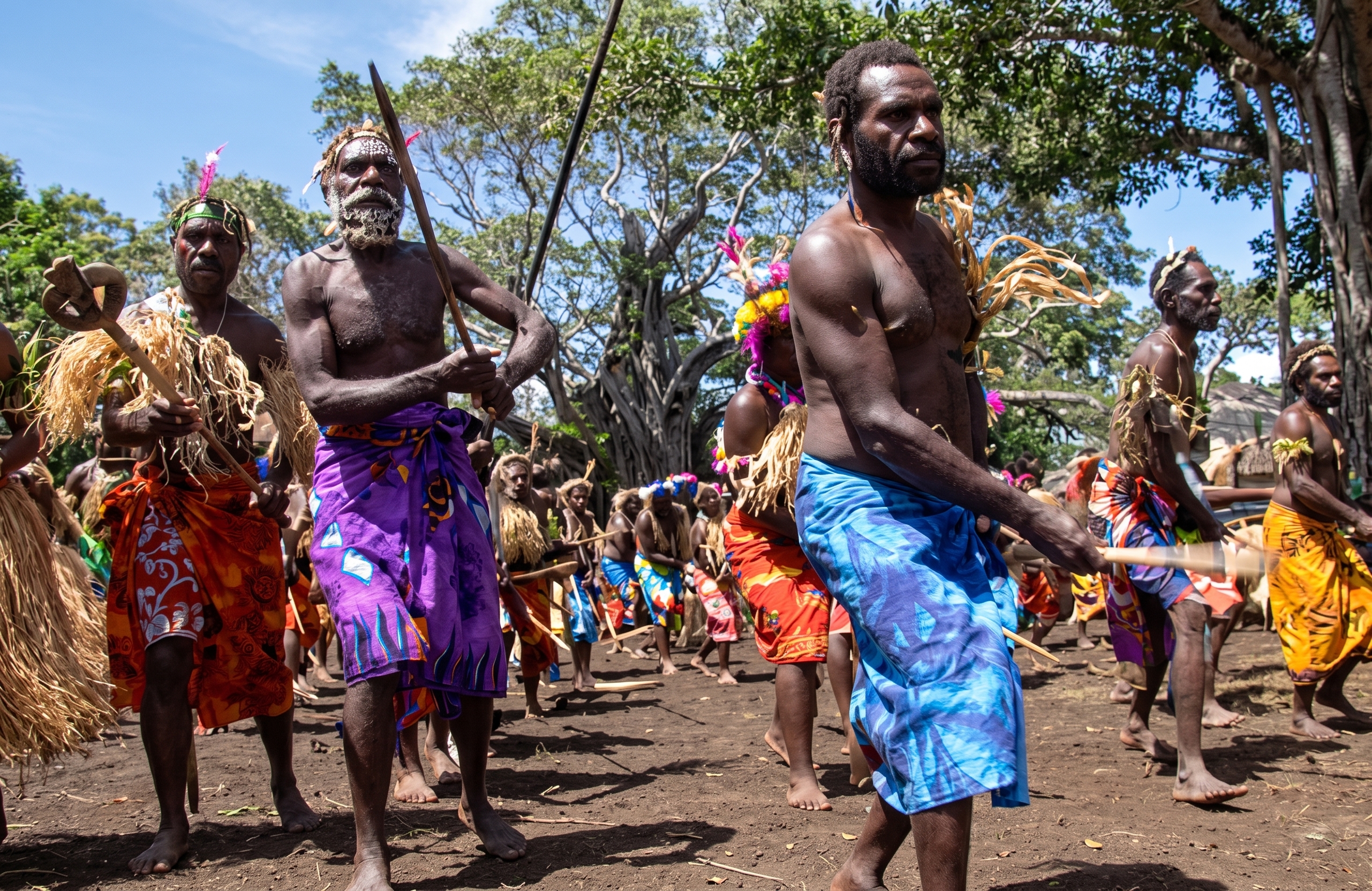
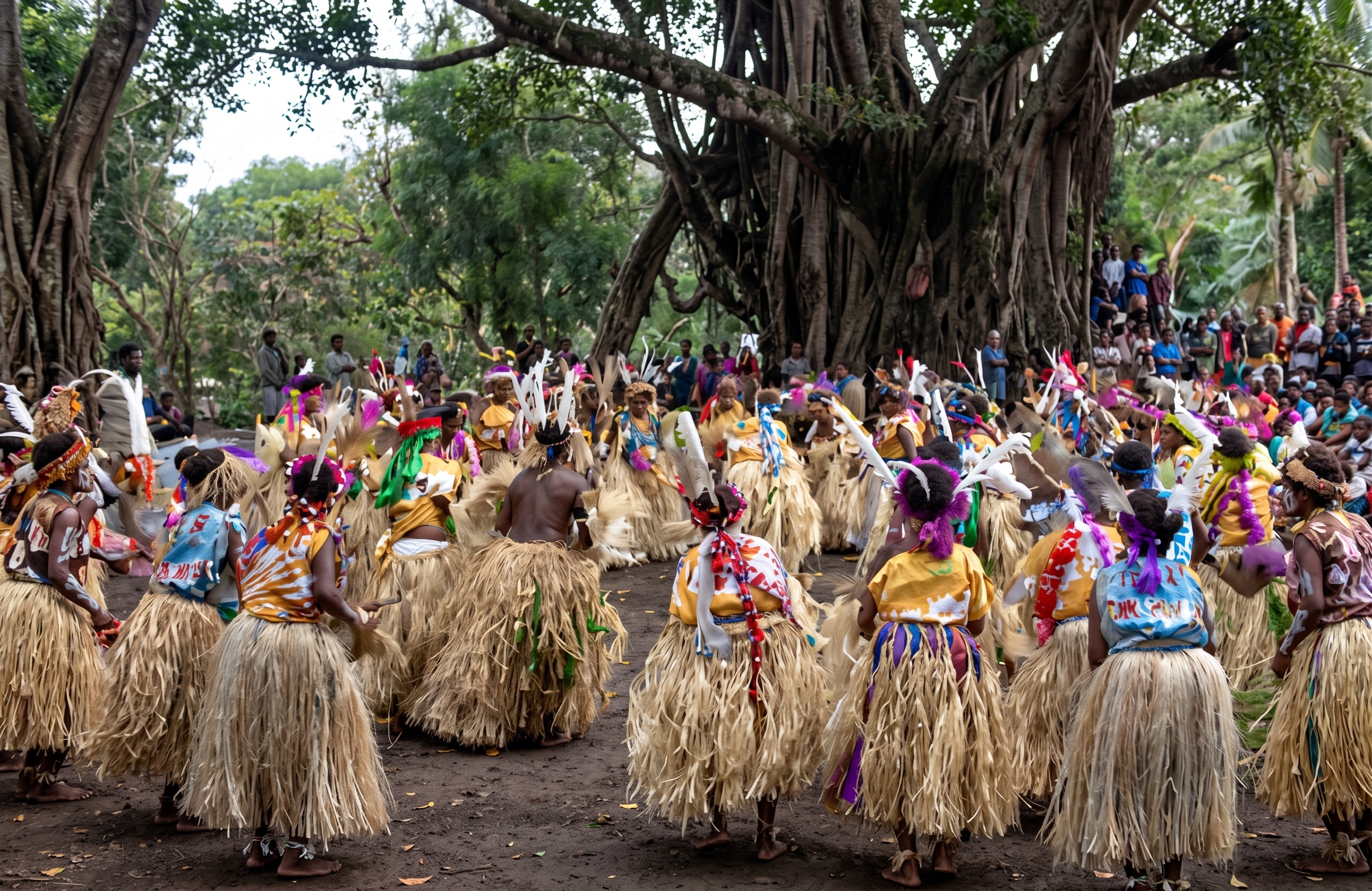
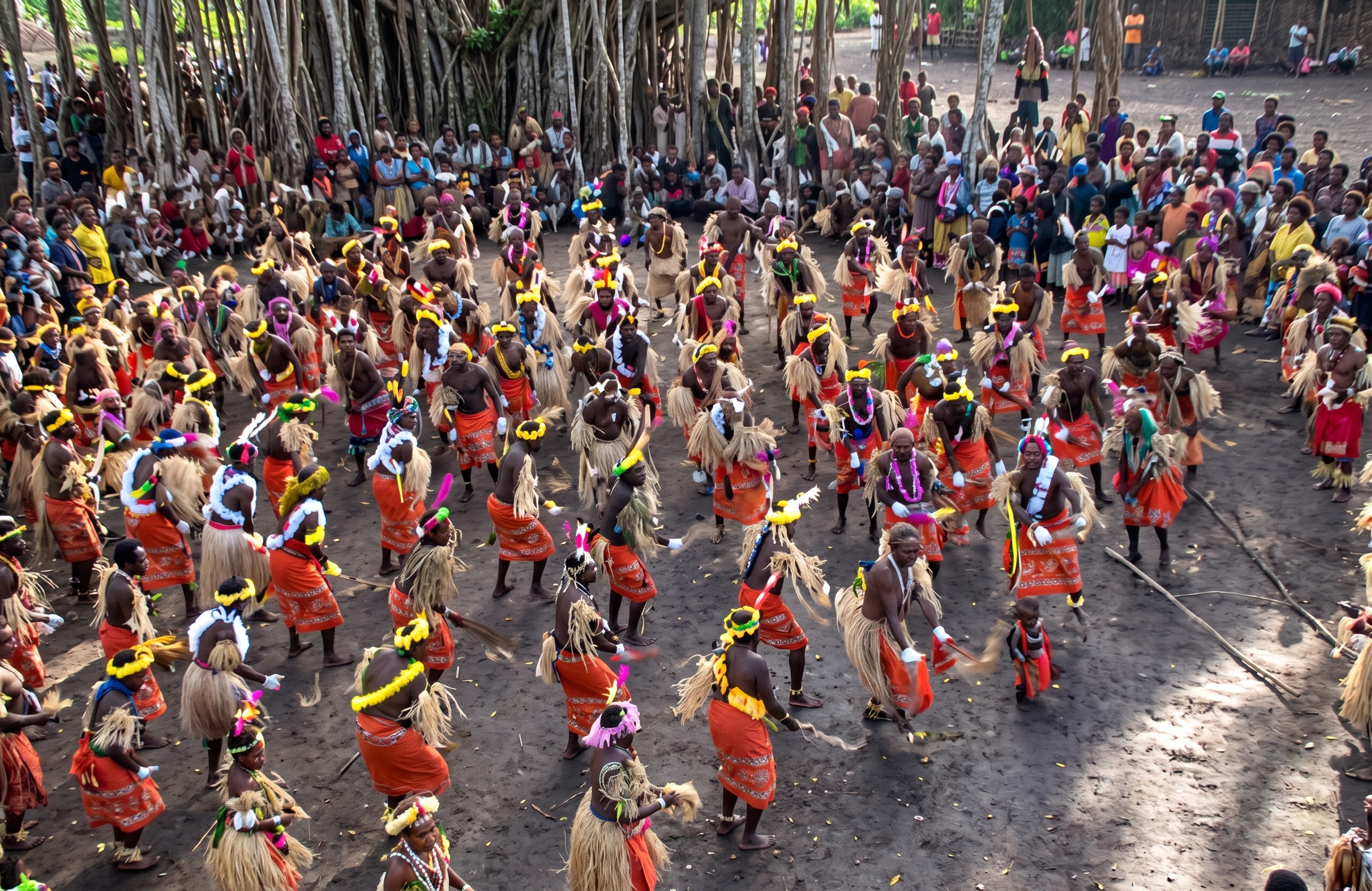
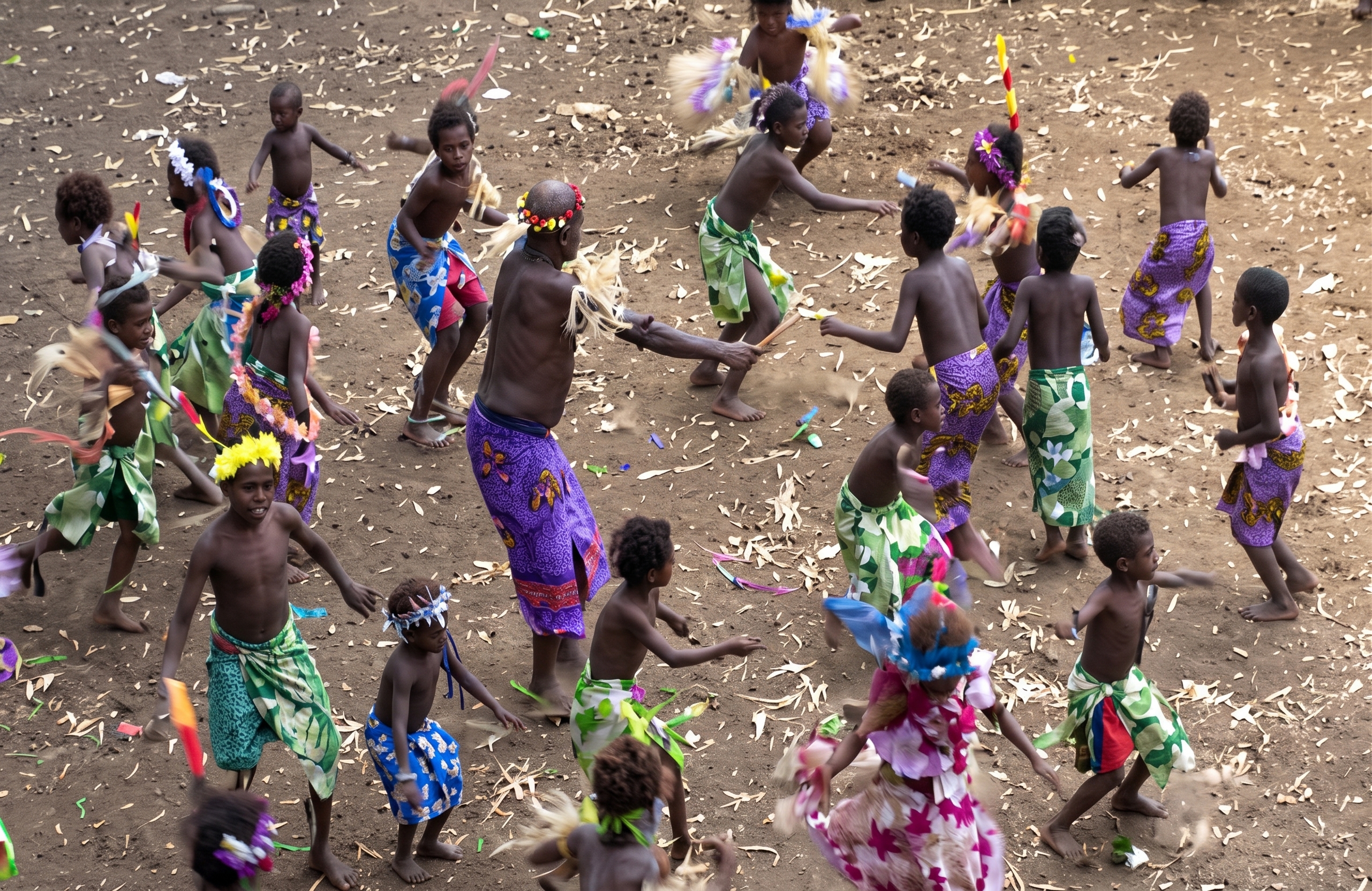
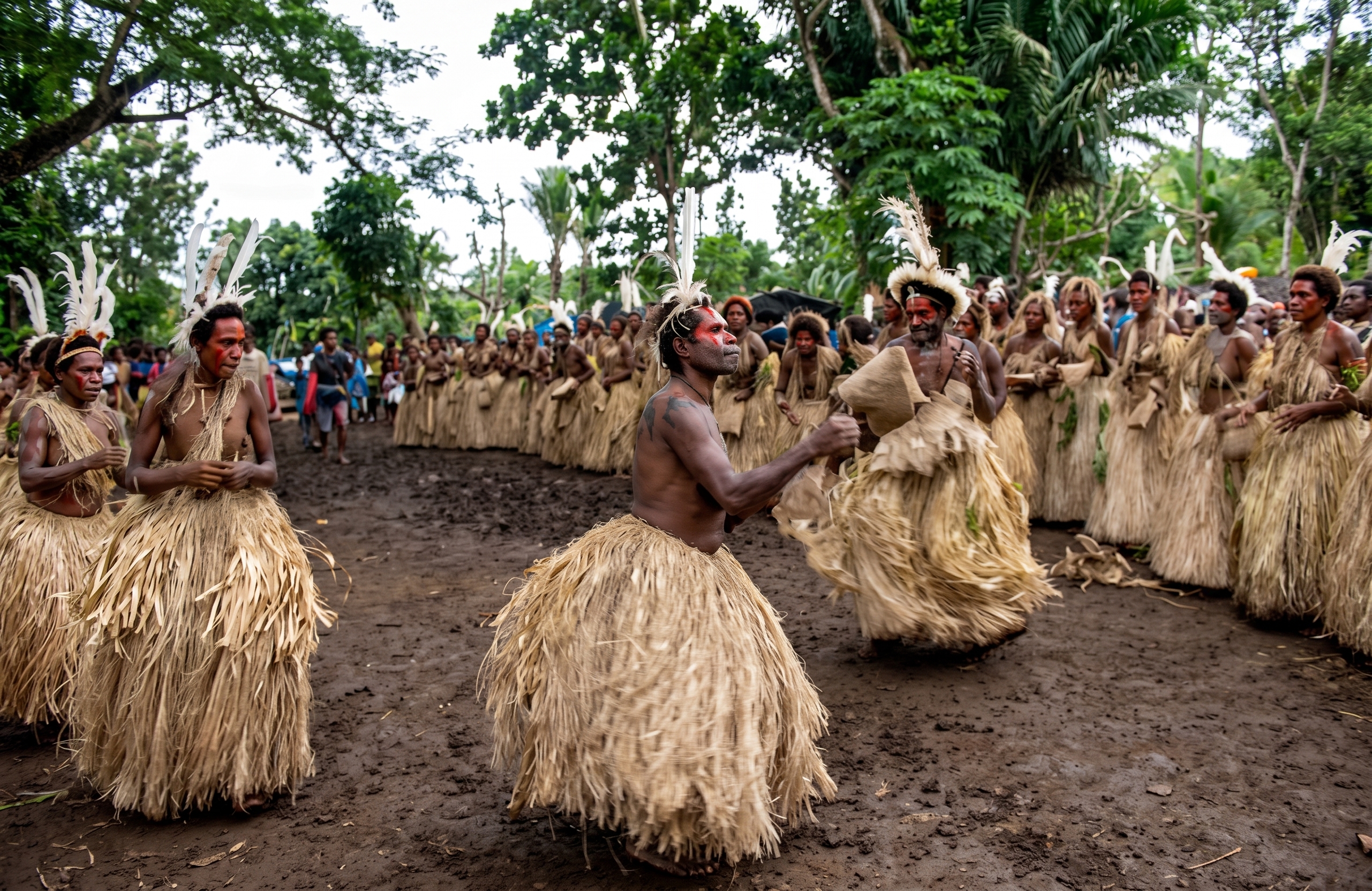
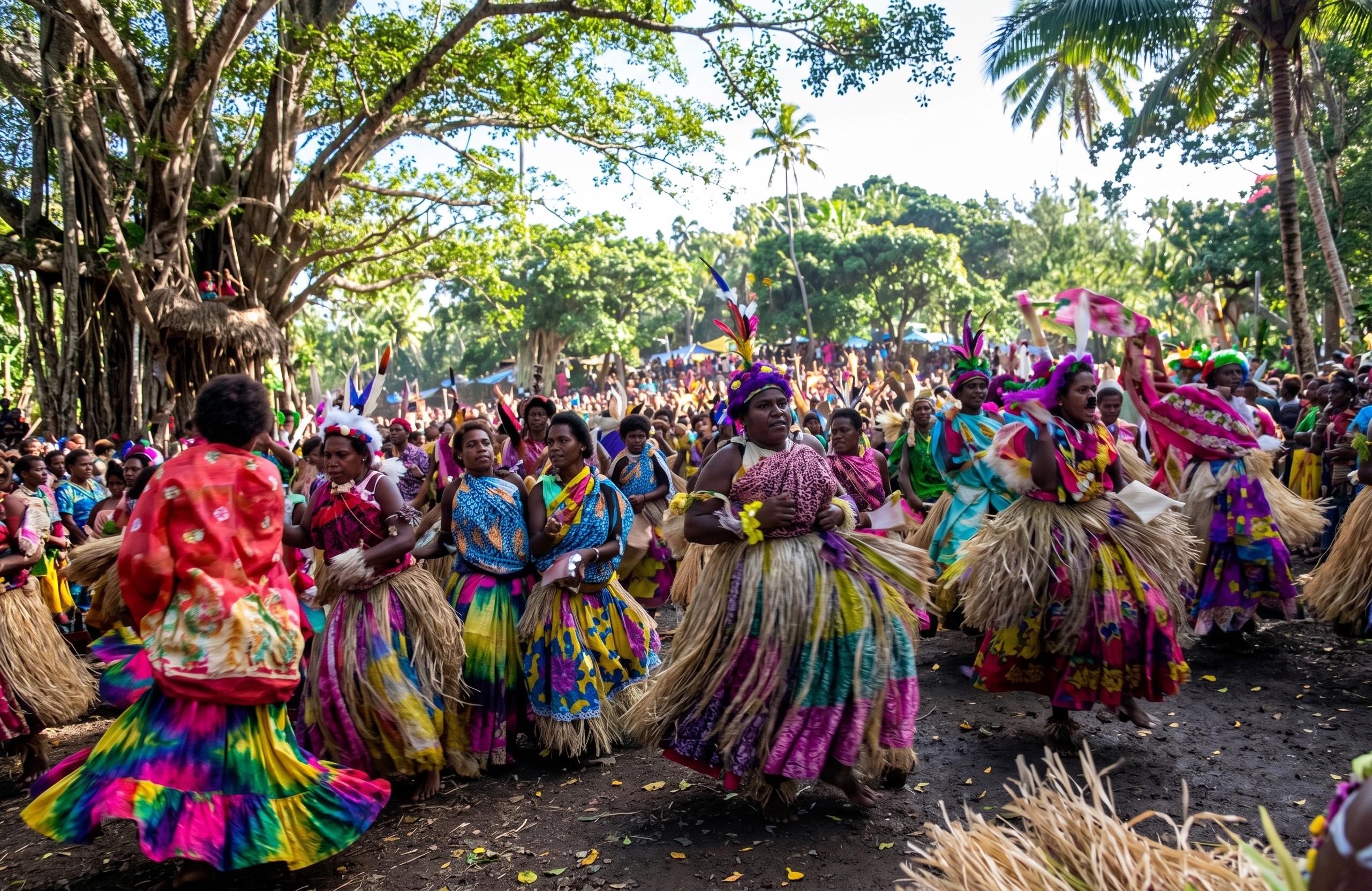
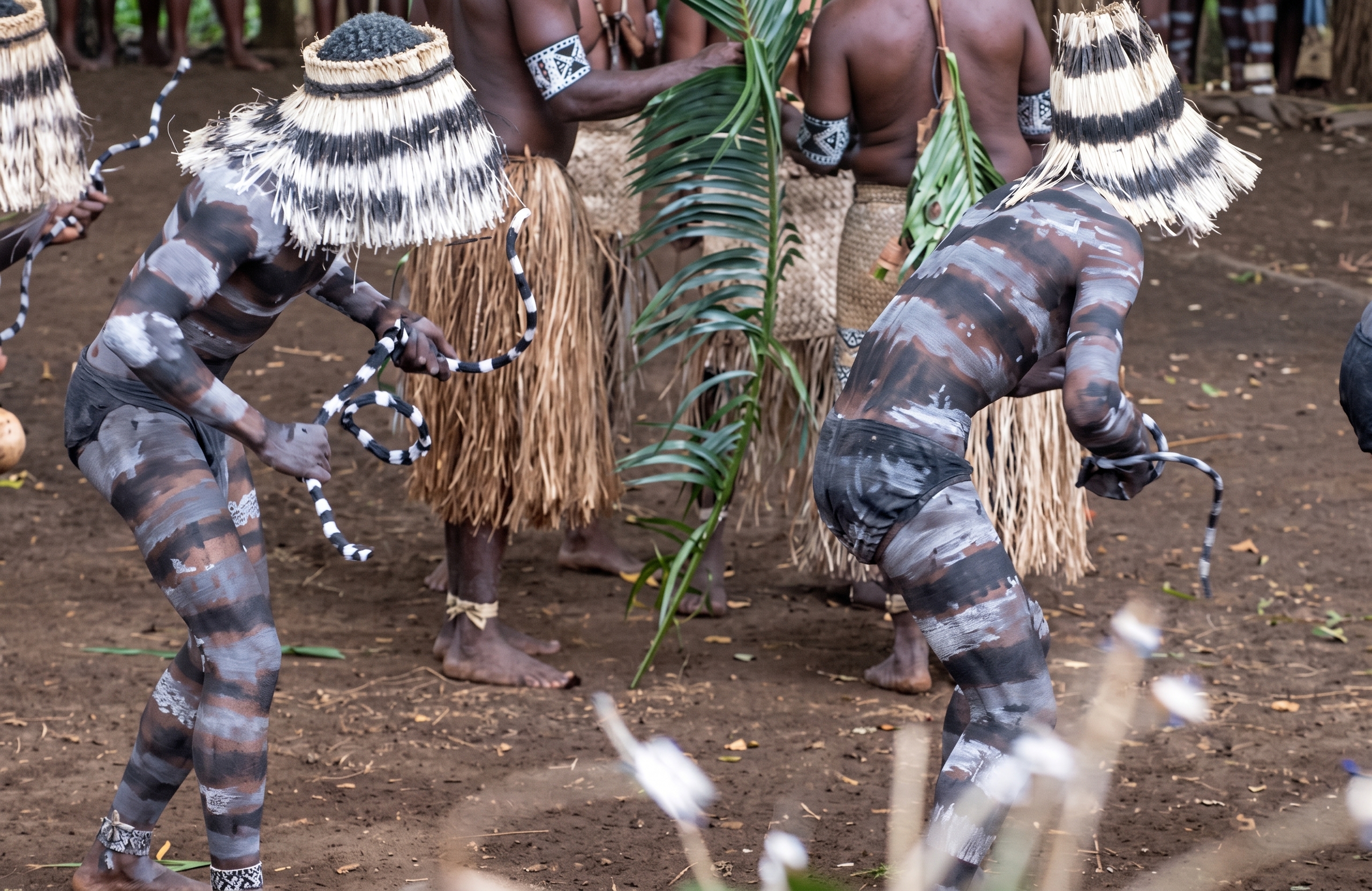
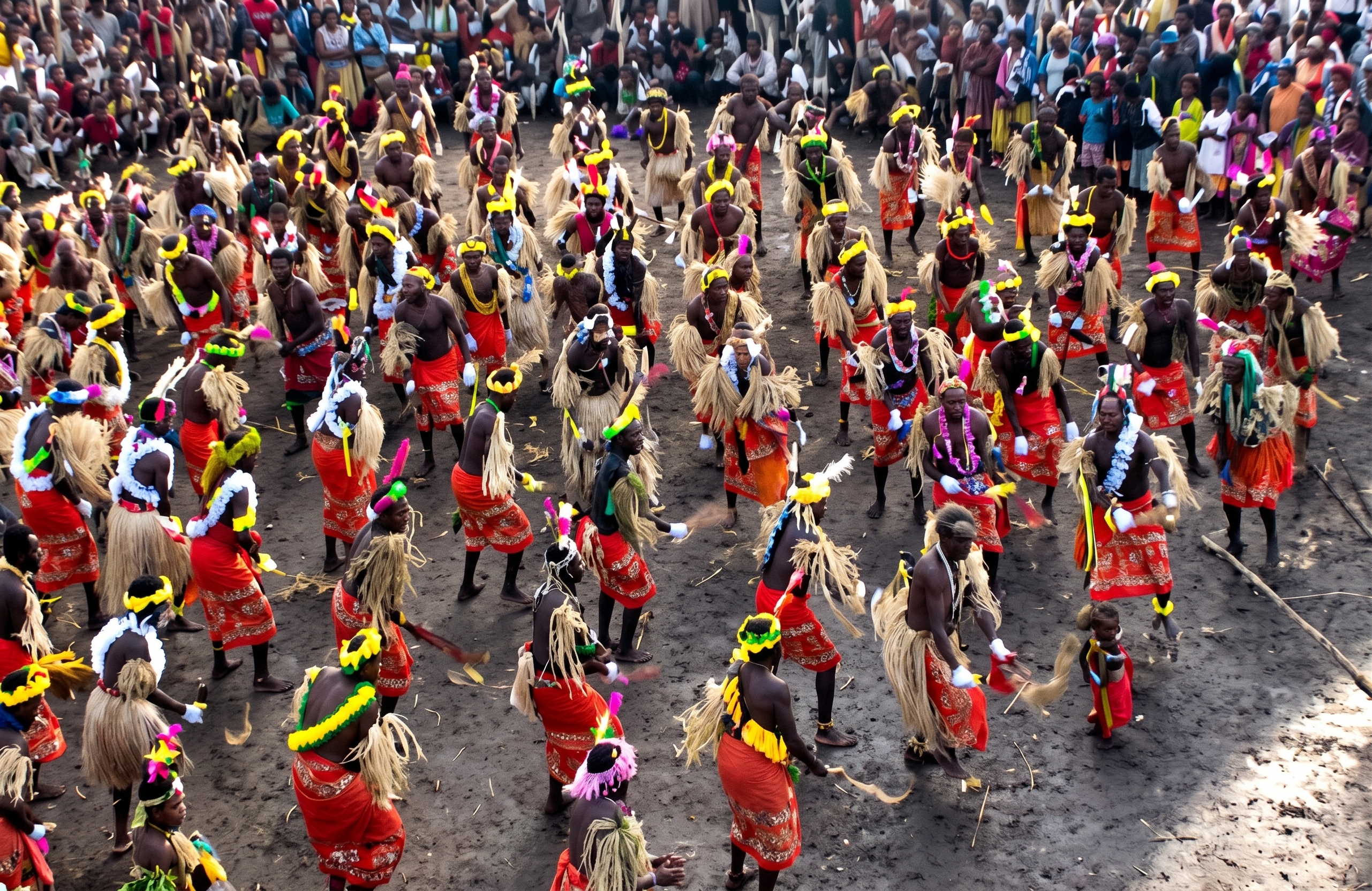
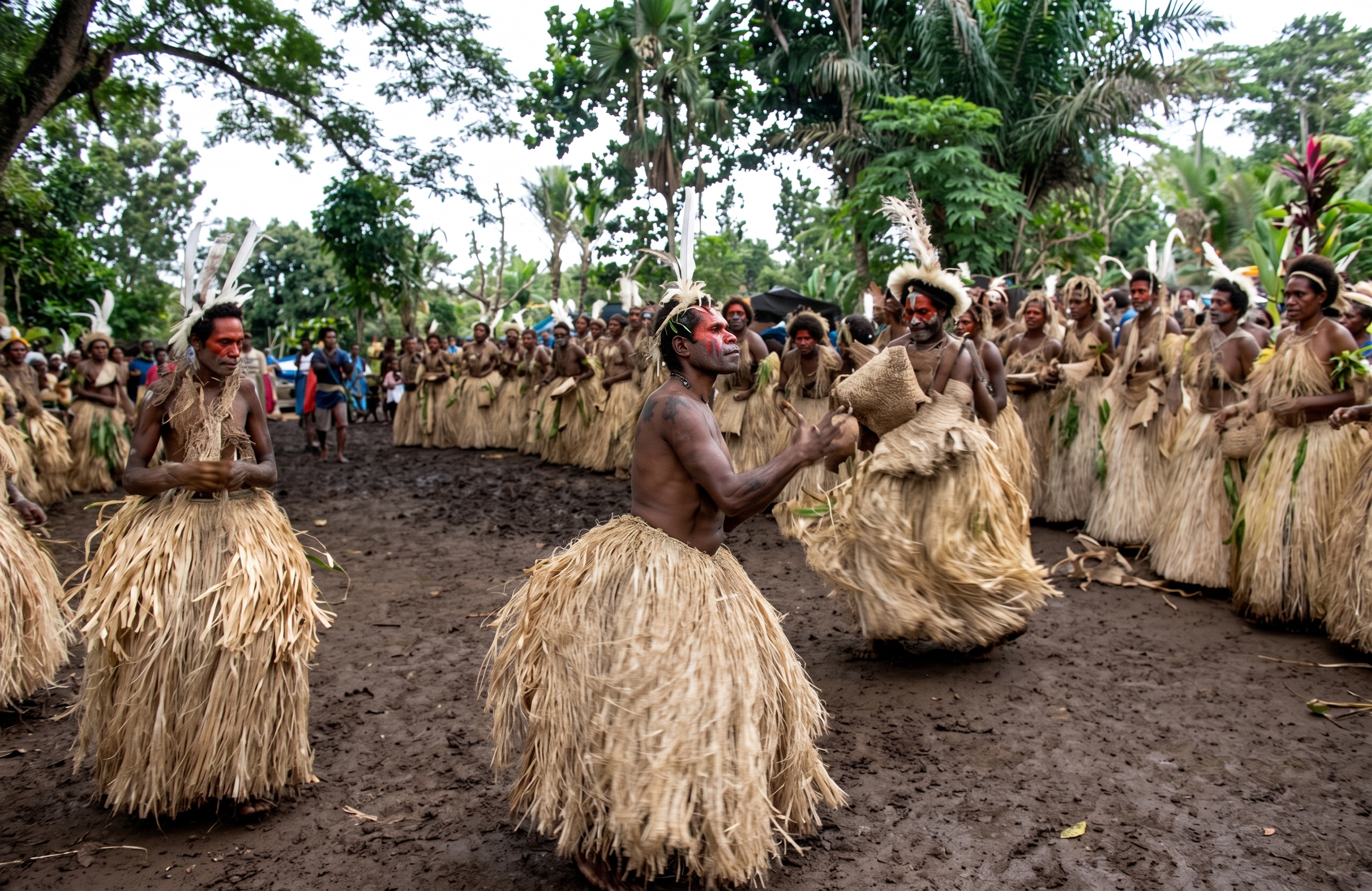
What I saw matched the anthropology closely, while adding what only being there gets you. I counted five named dances, not the two most outside sources mention: Napen Napen, the women's dance, through the night, keeping time by striking woven pandanus bags of fern, and four men's dances — Nao, Naser and Consesua, which locals classified as “female,” and the Toka itself, the one dance classed as “male.” I watched two men dig out a twelve-year-old kava plant by hand for the ceremony — kava is propagated only from cuttings, and Tanna custom holds every kava plant is female — and was taught to cut and replant a stem of my own. At the climax I counted 73 pigs and 73 kava plants brought into the arena, clubbed and aligned by a specialist called simply “the clubber” — a sacrifice meant, as I was told, to cancel out whatever had happened in the license of the night before. What followed is Maussian reciprocity made completely literal: each man who takes a pig from the pile is obliged to return “one of the same size, value according to the species” within about a month — the debt, and the alliance it represents, running on long after the dancing stops.
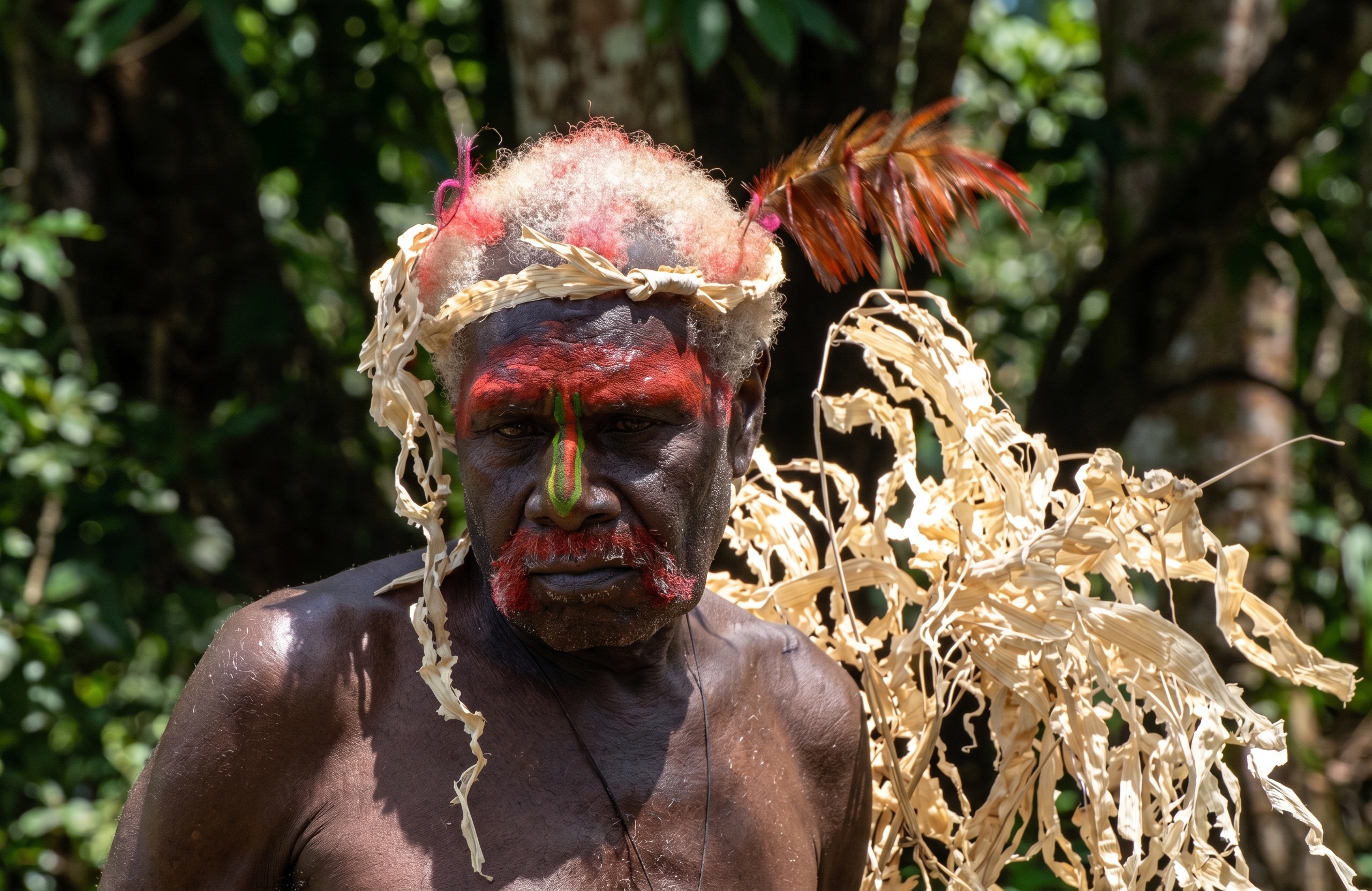
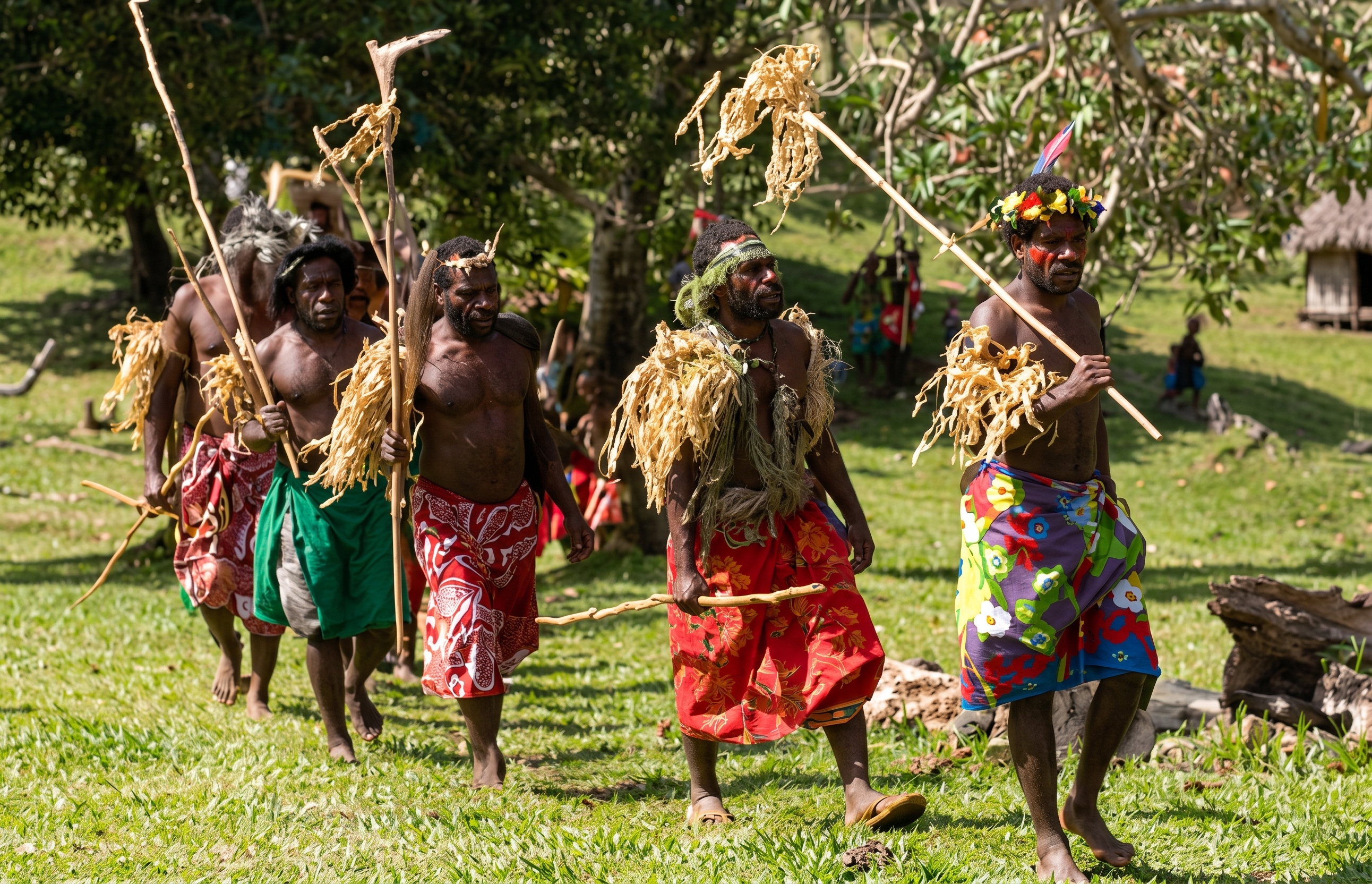
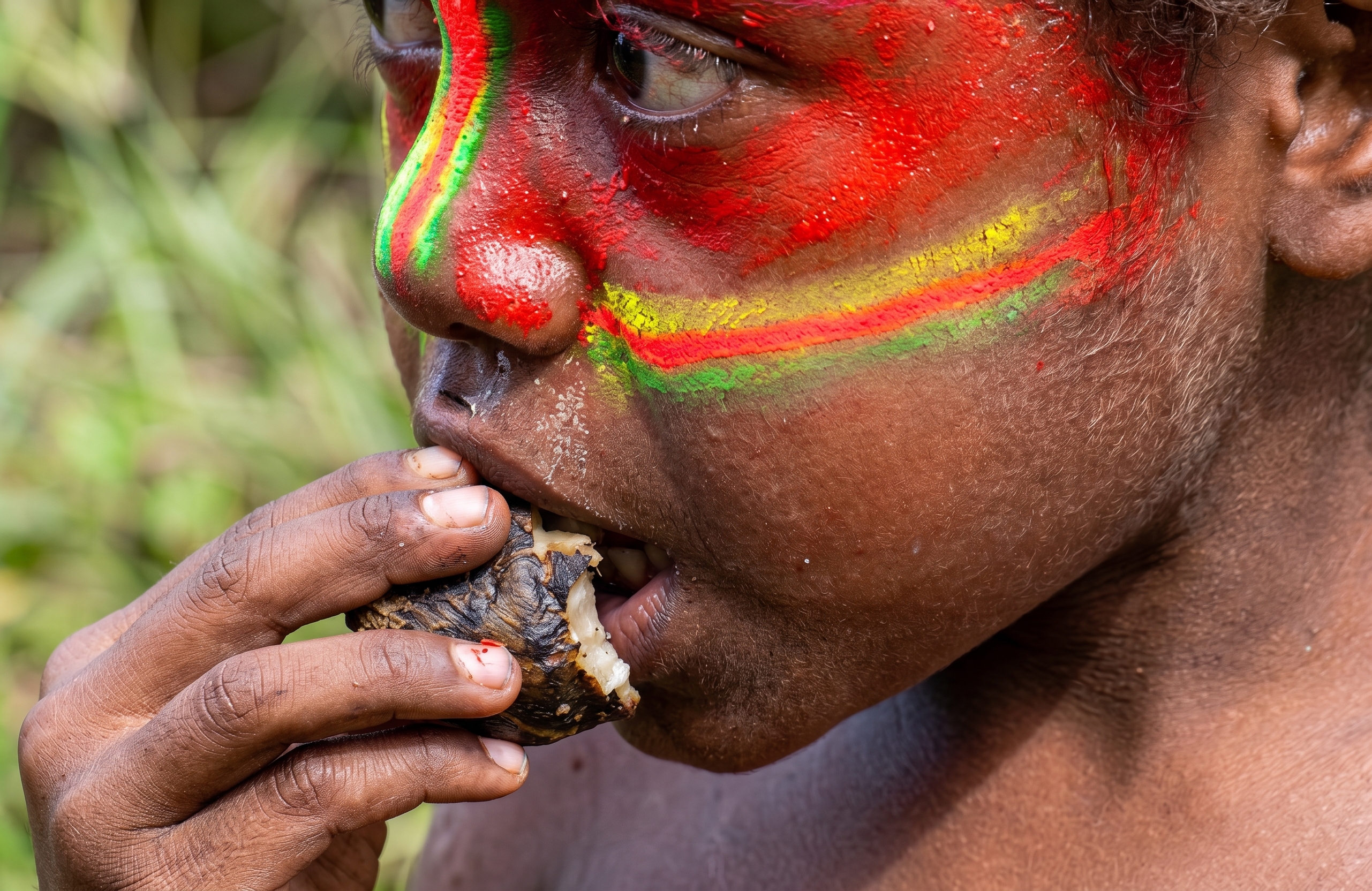
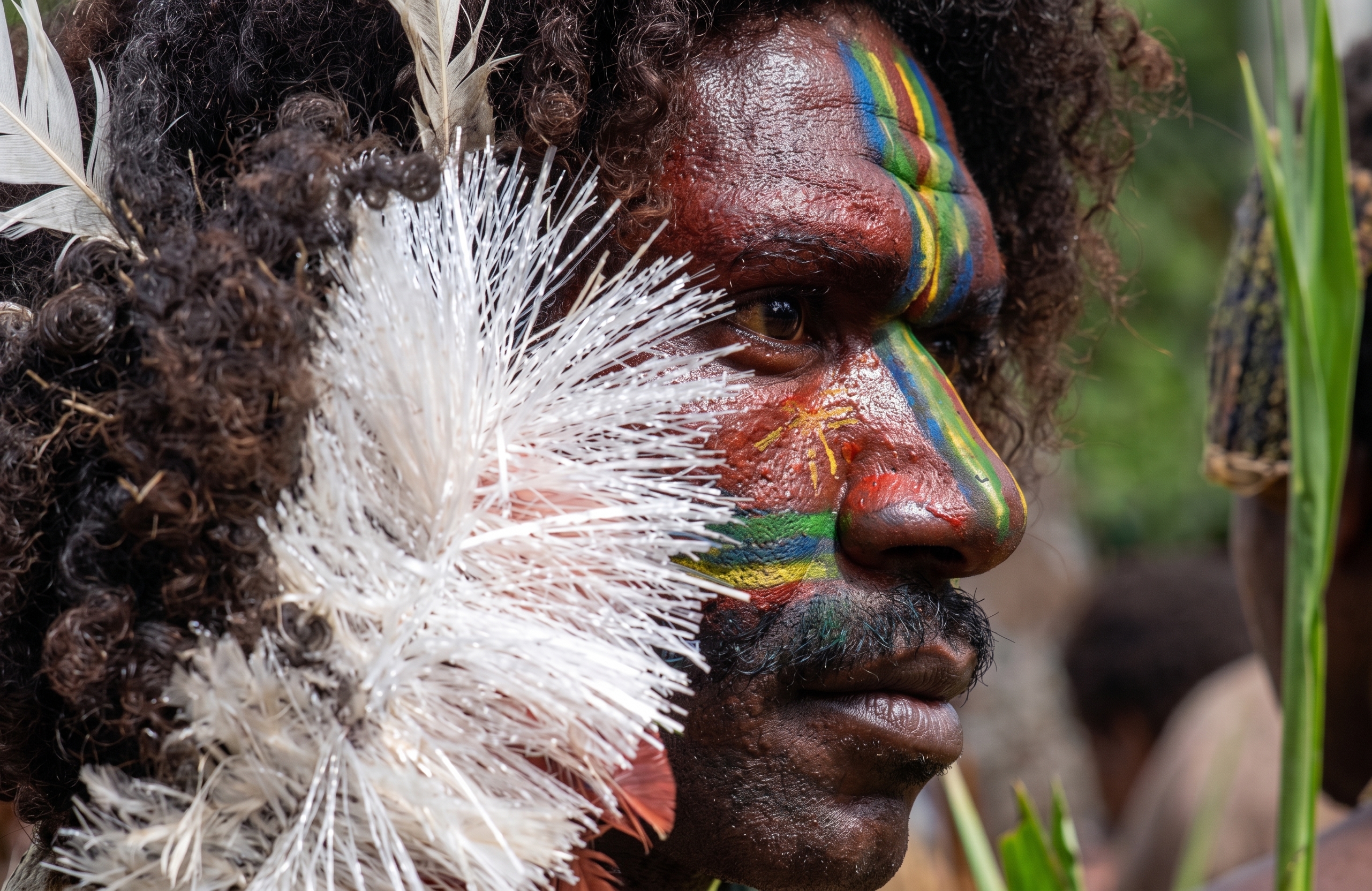
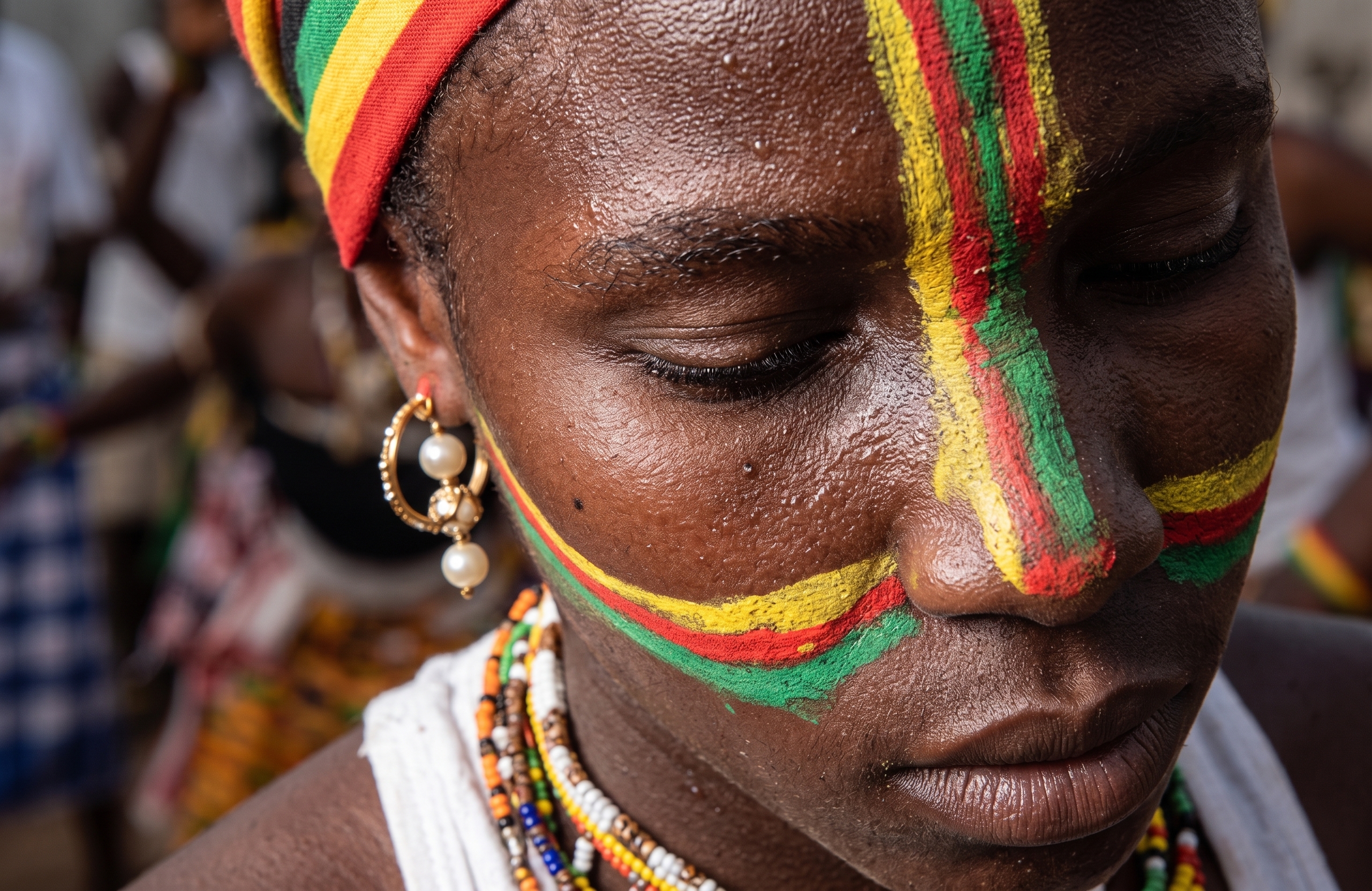
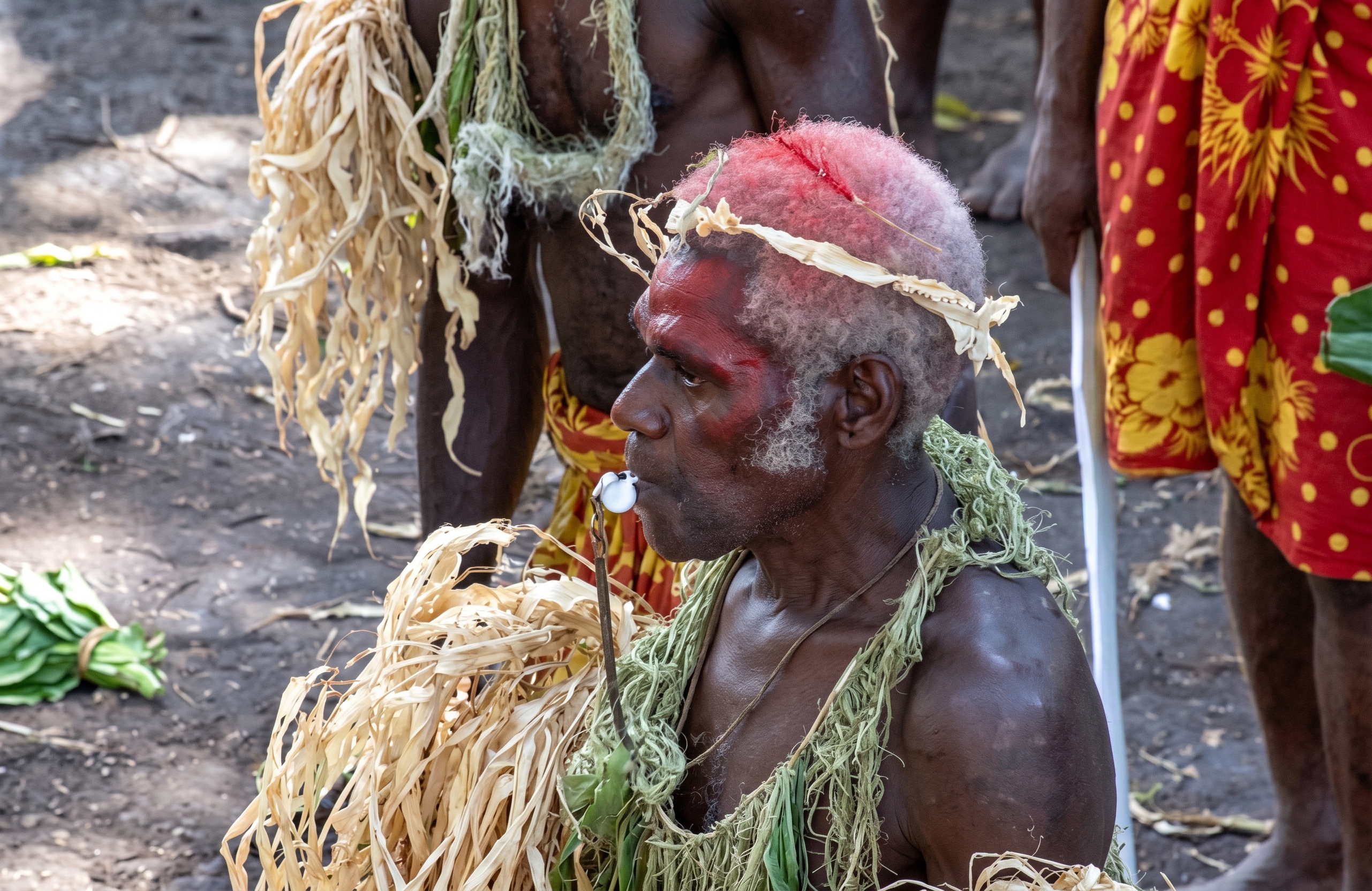
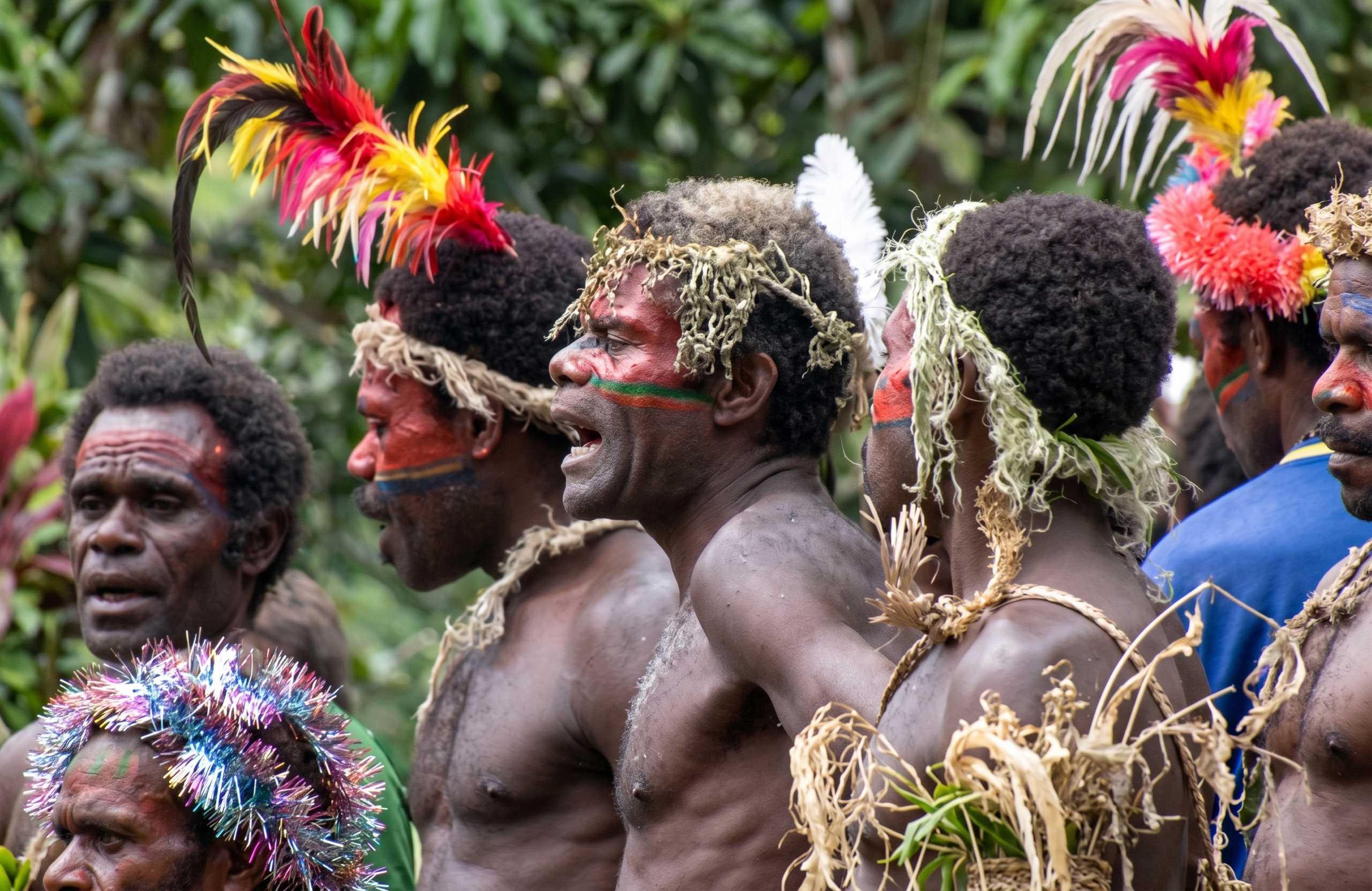
Dress carries its own layer of meaning. Anthropological and tourism sources alike describe leaves, feathers and shell ornaments — kastom dress, each village's version marking its own identity. What I'd add: the intricate face paint applied in the hours before the dance, the layered grass skirts, a twenty-foot pole of hawk feathers carried in by the men and planted against the ceremony's central banyan tree, said to represent a high chief and his connection to “the god of the earth.”
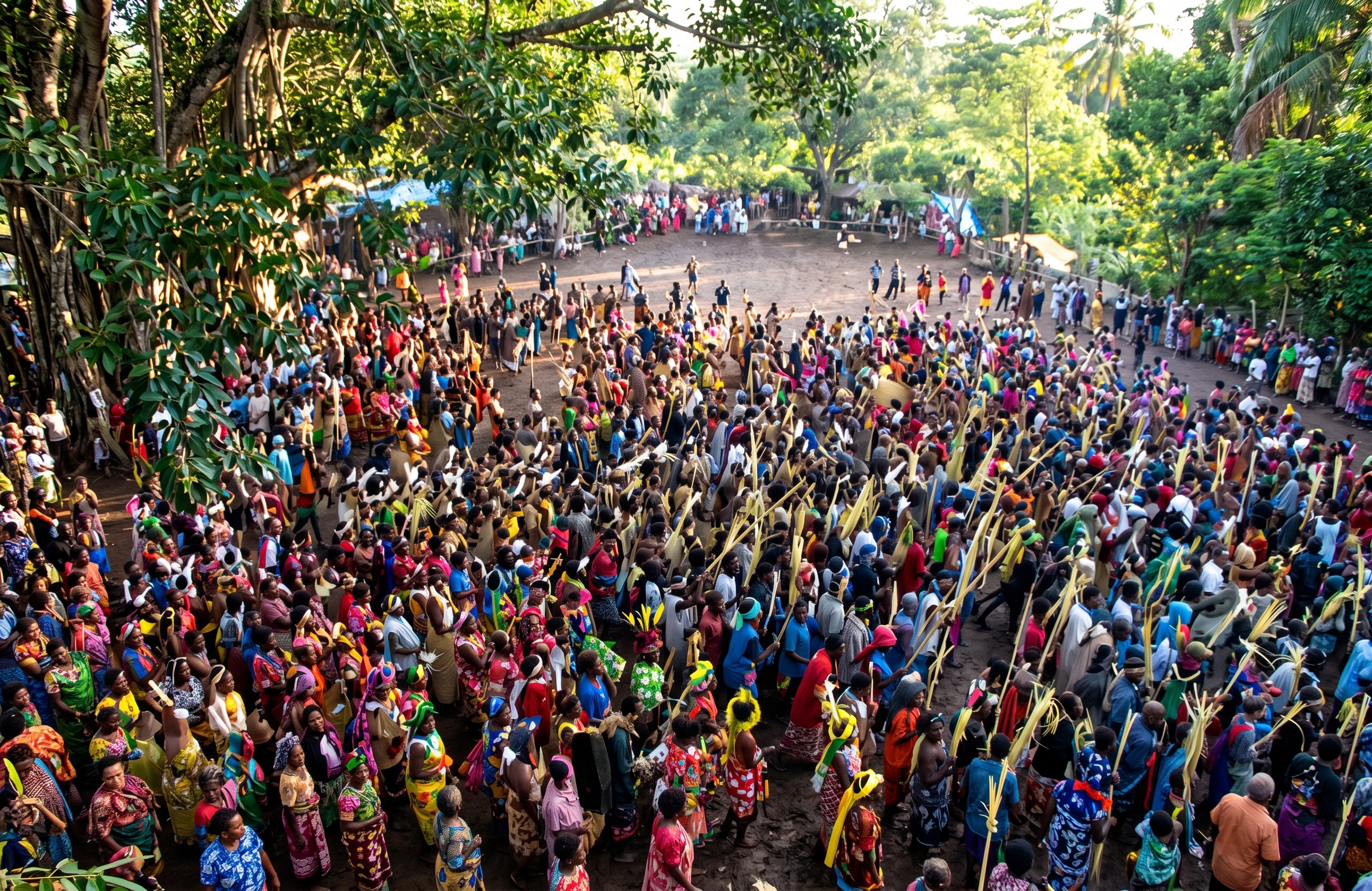
That's the part that's stayed with me — not just the spectacle of it, the pigs and feathers and a crowd pushing toward a thousand people, but that it worked exactly as it was meant to: debts settled, alliances renewed, a chief installed, none of it needing anyone from outside to referee it. Bonnemaison would call that kastom holding its ground. I just call it one of the most extraordinary things I've ever been allowed to witness — which is a large part of why it became a book, and a film, and why, nearly twenty years on, I'm still telling people about it.